Closes more orders than operations can fulfil.
Accredited by ACCIÓ
AI is already in your company. What's missing is having it where it belongs.
Your employees already use it, with personal accounts and company documents outside the company. Some departments have already run pilots that don't talk to each other. And someone has proposed automating an entire process without anyone looking at what happens next.
That is where we start: by looking before automating.
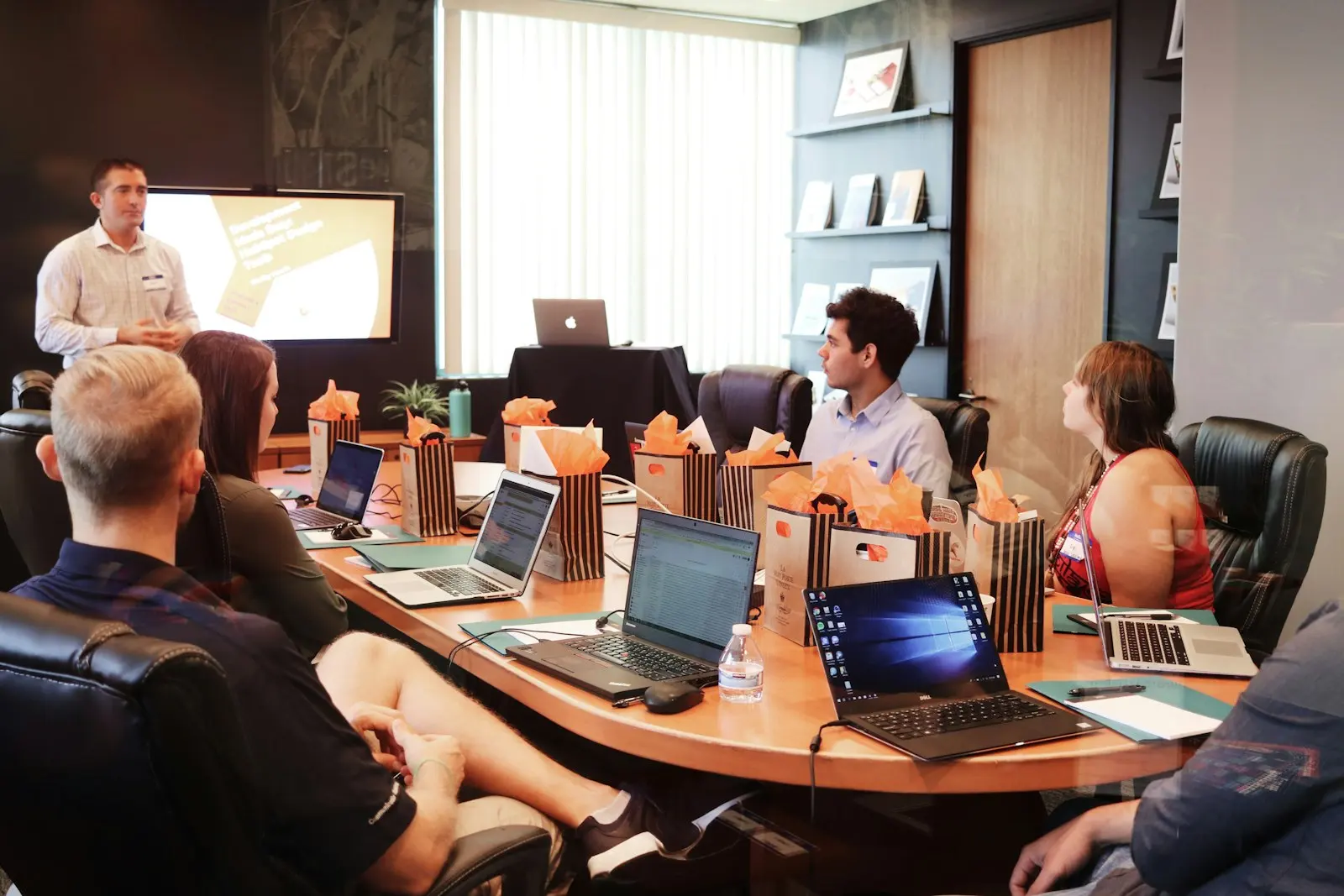
Over seven years applying AI with sound judgement for leading institutions and corporations







Starting point
What is happening today
Almost every company is rolling out AI backwards.
First come the tools, brought in by each employee and outside the company's control. Then come the pilots: each area automates its own patch, with its own data and its own supplier, with no common foundation. And at the end, if there is time left, someone asks what the company wanted to achieve with all this.
The result is familiar: sensitive documents in accounts that don't belong to the company, projects that can't be maintained or connected, and a workforce that sees AI as a threat rather than a tool.
- 1ToolsBrought in by each employee
- 2PilotsEach area, its own
- 3Company goalIf there is time left
It is not a technology problem. It is a problem of order.
A made-up case
An example of how it goes wrong
Picture a company that sells online and gets a lot of customer enquiries. The support team is overloaded, so management decides to bring in an AI assistant that answers on its own. It works: the assistant replies faster, the "enquiries resolved" metric goes up and the team can breathe.
What nobody has looked at is why so many enquiries come in. Most of them come from a confusing invoice and a shipping email that arrives late. The assistant answers them all, very well, one by one. But the invoice is still confusing, so every week more enquiries come in, the assistant answers more, the metric keeps rising and the cause stays untouched.
A few months later the company pays more for the assistant, customers come back less often and nobody understands why, because the customer support dashboard is green.
Reinforcing loopSpeeds up the symptom, hides the cause
- 01More enquiries come in
- 02The assistant answers more
- 03The metric keeps risingDashboard is green
- 04Fixing the invoice looks less urgent
The cause, untouched
A confusing invoice and a shipping email that arrives late.
That is a reinforcing loop: automation speeds up the symptom and hides the cause.
The better the assistant works, the less urgent fixing the invoice looks. The wrong thing has been optimised.
For less than the assistant's budget, changing the invoice and the email would have removed half of the enquiries.
The whole
Align the parts, don't just speed them up
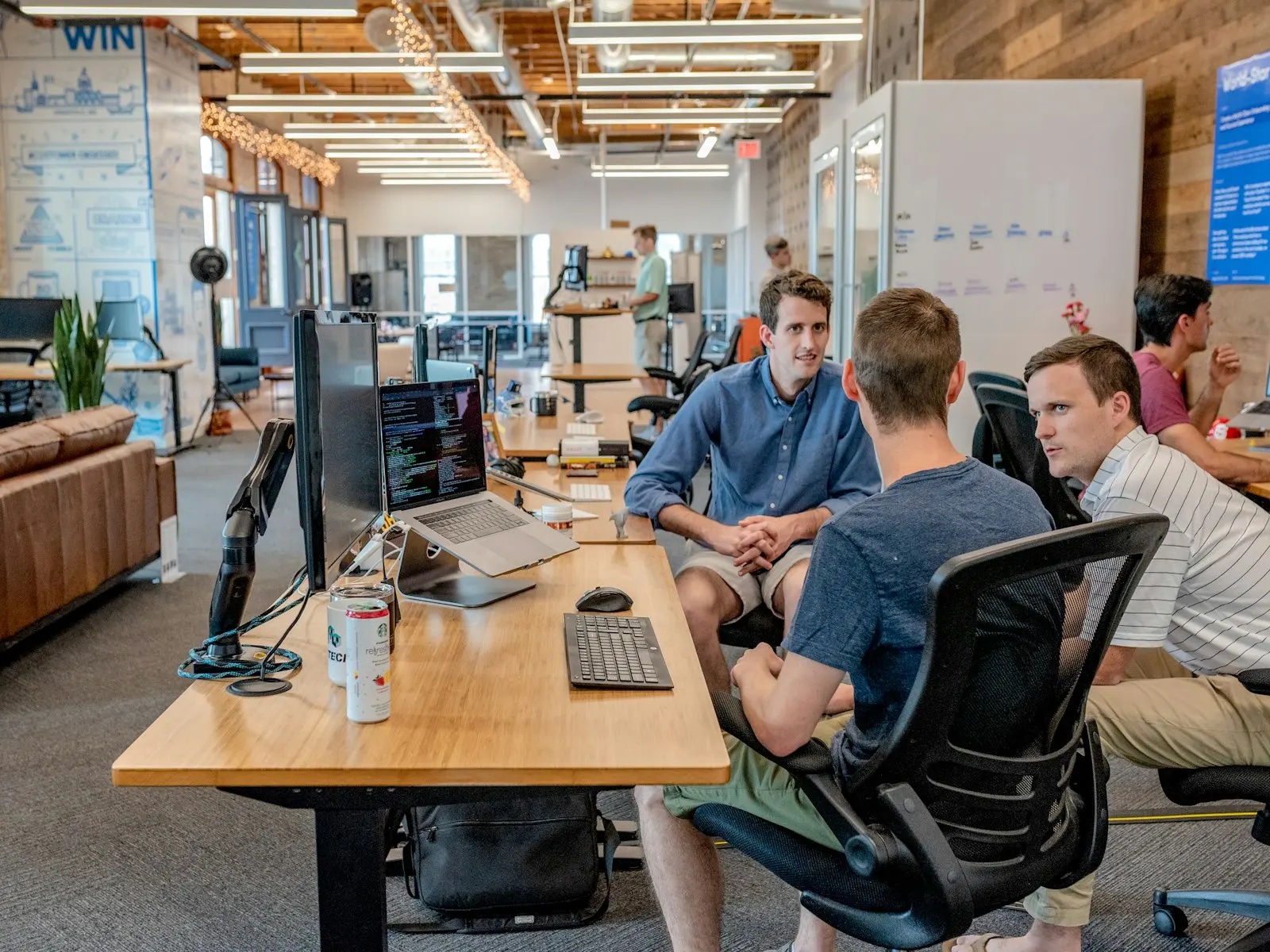
A company is a set of areas that depend on one another. When each one automates its own piece to improve its own metric, the metrics improve and the company doesn't.
Brings in more visits that don't buy.
Closes more enquiries that product never gets to see.
Company goalNo owner
Each area does its job well and the company's goal is left without an owner.
The consequences take time to show because no dashboard displays them:
- Margins that shrink for no clear reason.
- Customers who don't come back.
- Teams that work more and deliver less.
- Decisions made with data that measures the part and not the whole.
That is why, before automating anything, you need to know what goal the company is pursuing, which part of it falls to each area and which metric truly measures it.
AI comes afterwards, at the point where the problem starts, and with a shared metric.
How we work
Why we analyse before touching anything
A company is not a list of independent processes: it is a system in which every change moves other parts, sometimes months later.
To avoid pulling the wrong lever, you need to see the whole of it before acting. We do it with methods that have existed for decades in organisational engineering and that almost nobody applies before automating:
- 1
The logs in your systems
Process miningThey show how the work really gets done, not how the manual says: where it repeats, where it waits and how much each step costs.
- 2
The people
Soft systems methodologyThey explain what each area understands by doing it well. These are almost always different things, and that is where misalignment begins.
- 3
The dynamics of the system
Systems thinkingIt reveals loops like the one in the example: where a local improvement makes the whole worse and which rule has to change to break it.
- 4
The structure
Viable system modelIt tells you which functions are missing or duplicated: who coordinates, who controls, who looks outwards.
- 5
The business model
It points to where value is captured today and which assets, above all data, are going unused.
- 6
The choice of method
It ensures each problem gets the right tool and not the fashionable one.
The outcome of the analysis is not a report: it is a short list of the two or three problems that cost the most, with the euros at stake in each one and the exact point where AI makes sense.
Short listOutcome of the analysis
ProblemEuros at stakeAI
1Here
2Here
3Here
- 1Company contextProcesses, data and rules in one place
- 2AI workstationOne per employee
- 3AutomationsWhere the problem starts
The implementation
Then, AI from the ground up
With the map drawn, implementation goes the opposite way to how it is usually done.
- 1
First, the context of the whole company in one place: processes, data and rules that any AI tool can use.
- 2
Then, each employee with their own AI workstation, provided by the company: agents and skills prepared for their role, with company data and under company control.
- 3
And each automation, at the point where the problem starts, with a metric shared by the areas it touches.
That way AI stops being a collection of pilots and becomes a cross-cutting layer: one context, one set of criteria and results that show up in the profit and loss account, not just on one department's dashboard.
Services
From the first assessment to implementation
Assessment
- Duration
- 30 minutes
- Price
- Free
The first conversation to understand the company's situation and decide the next step.
Company X-ray
- Duration
- 4 to 10 weeks depending on size
- Price
- On request
Four deliverables
- Traceability index: how much of the operation leaves a trace in systems.
- Map of the two or three problems that cost the most.
- Euros at stake per problem.
- Management dashboard prototype with real data.
Implementation from the ground up
- Duration
- In phases
- Price
- On request
Context of the whole company, an AI workstation per employee and automations at the point where each problem starts, in phases and with the return already quantified in the X-ray.
How long the X-ray takes
It depends on the size of the company: on the people, the areas and the systems to be read, not on turnover. Between 4 and 10 weeks, always with the same four deliverables.
- 4weeksSmall company
Up to around 100 people and one core system.
- 6weeksMid-sized company
From 100 to 500 people or several systems.
- 8 to 10weeksLarge company
Or a group with several legal entities.
- 1Kick-off, access and baselineWeek 1
- 2Logs and processesWeeks 1 to 3
- 3Workshops with the areasWeeks 2 to 4
- 4Euros at stake per problemWeeks 4 and 5
- 5Management dashboard and closeWeeks 3 to 6
Before that, a week 0 at no cost for access, confidentiality and scheduling.
4-week version. The phases overlap more: kick-off and logs in week 1, workshops in week 2, euros at stake in week 3, dashboard and close in week 4.
8-to-10-week version. Logs and workshops take longer because there are more systems and more areas to read.
The exact timeline is set in the proposal, after the free assessment.
Main service · Fixed monthly fee
Your AI director from €1,200 a month.
One morning a month at your company with your technician and the rest of the work done remotely. Every month, one less process done by hand and a report with the hours saved.
See the service
Prices exclude VAT. Annual contract with a fixed monthly fee.
Also: Technology partner and AI audit. See all services
The guarantee
What you risk
Nothing.
The X-ray comes with a guarantee: before we start we agree with you what result it has to find and how it is measured, with a formula fixed in advance and with your data, not ours.
If it does not reach that result, the first implementation phase is at no cost.

Start by knowing where you stand.
A free 30-minute assessment to understand your situation and decide whether it makes sense to go further. If it does, great; if not, it was a pleasure talking.
Book a free assessmentProven trust
Leading institutions, corporations and technology partners
Over 7 years applying AI with sound judgement in Catalonia, across Europe and worldwide.